How does down insulation compare to synthetic in terms of warmth-to-weight ratio for outdoor jackets?
Down gives the most warmth for its weight when dry; synthetic trades some of that edge for warmth when wet. The practical question is how to read the specifications, since none of the jacket pages we checked lists a measured warmth value.
Research guide by Senso Research · Sources checked September 25, 2026
The quick answer: Our pick for mostly dry cold is an 800-fill-power down jacket such as Patagonia's Down Sweater (369 g, $289), with Responsible Down Standard–certified down in a recycled nylon shell. If your cold is often wet, compare Patagonia's Micro Puff Jacket: PlumaFill synthetic, 295 g at the same price, and, Patagonia says, the best warmth-to-weight ratio of any jacket it has made (a brand claim, not a lab result). For the lowest listed weight, Mountain Hardwear's Ghost Whisperer is lighter still at 226 g.
What decides warmth-to-weight
Loft per ounce. Patagonia's down vs synthetic guide defines fill power as the space one ounce of down takes up in cubic inches. Higher fill power means more loft and better insulation for the same weight.
How much insulation. Fill power describes quality, not quantity, and few pages list how much down a jacket holds: Mountain Hardwear gives 75 g for the Ghost Whisperer, while the Patagonia and Arc'teryx down pages give fill power only. Synthetics are labeled by weight (such as "60-g"), so the two labels cannot be compared directly.
Moisture. The same guide calls down's warmth-to-weight unparalleled when dry, and names staying warm when wet as synthetic's main advantage.
Everything that isn't insulation. Shell, lining and zips all count toward the weight on the tag.
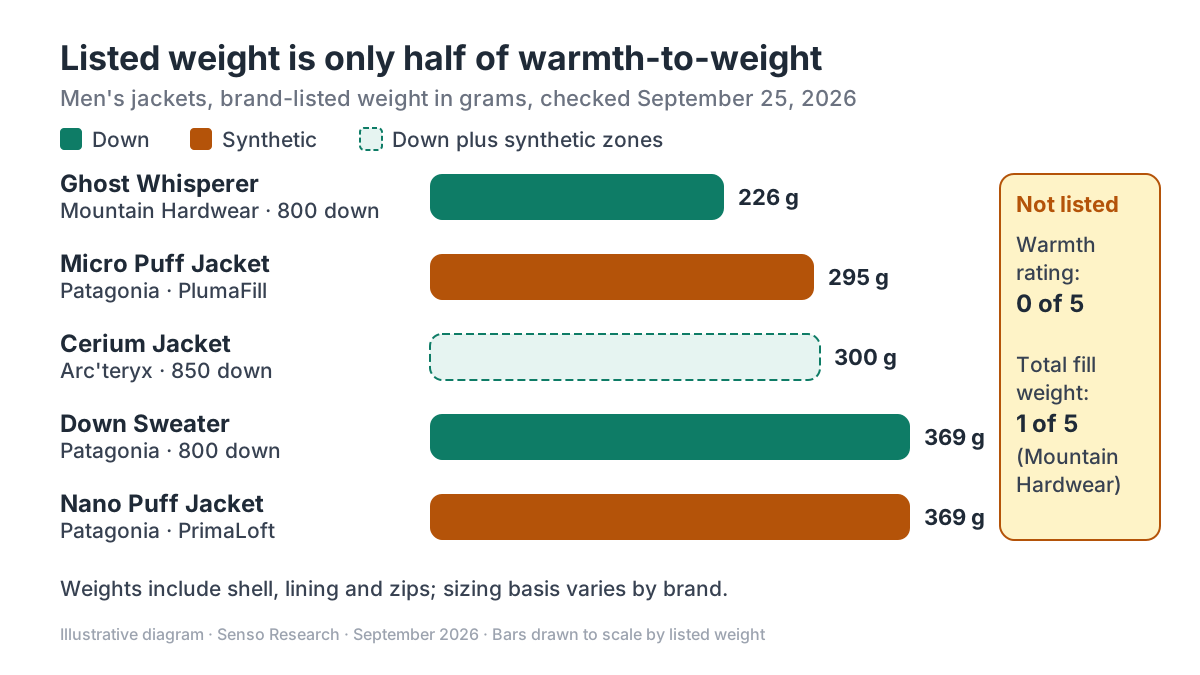 Original diagram by Senso Research. Bars show brand-listed weights for men's jackets on September 25, 2026; weight alone does not show warmth, and each brand's sizing basis differs.
How the options compare
| Jacket (men's) | Insulation | Listed weight | Shell | Wet-weather design | US list price |
|---|---|---|---|---|---|
| Patagonia Down Sweater | 800-fill-power RDS down | 369 g | 20-denier recycled nylon | DWR finish over down | $289 |
| Patagonia Micro Puff Jacket | 65-g PlumaFill, recycled polyester | 295 g | 10-denier recycled nylon | Warm-when-wet synthetic | $289 |
| Patagonia Nano Puff Jacket | 60-g PrimaLoft Gold Eco, recycled | 369 g | Recycled polyester ripstop | Warm-when-wet synthetic | $239 |
| Mountain Hardwear Ghost Whisperer | 800-fill RDS down, 75 g | 226 g | 10D recycled nylon (solid colors) | Synthetic in first cuff baffle | $370 |
| Arc'teryx Cerium Jacket | 850-fill down plus Coreloft 80 | 300 g | Recycled 15D nylon | Synthetic mapped to damp-prone areas | $380 |
Sources: Patagonia product pages for the Down Sweater, Micro Puff Jacket and Nano Puff Jacket; Mountain Hardwear; Arc'teryx; checked September 25, 2026. Men's non-hooded jackets; USD list prices before tax; weights as each brand lists them (Mountain Hardwear specifies size medium).
Where Patagonia fits — and where it doesn't
Choose Patagonia's Down Sweater when your cold is mostly dry. It uses 800-fill-power down certified to the Responsible Down Standard by Control Union, in a NetPlus recycled nylon shell with a DWR made without intentionally added PFAS.
Choose the Micro Puff Jacket when you expect damp cold or heavy sweat but want low weight. Patagonia says PlumaFill replicates down's structure in a continuous synthetic that stays warm when wet. The Nano Puff is the lower-priced synthetic at $239, at the Down Sweater's listed weight.
Consider Mountain Hardwear's Ghost Whisperer instead when weight comes first: 226 g with 800-fill RDS down and a 10D shell, at $370.
Consider Arc'teryx's Cerium instead when you want down with synthetic backup where moisture builds: 850-fill down plus Coreloft in mapped zones, at 300 g and $380.
A worked example
Illustrative arithmetic based on the listed figures above, not a warmth test.
- Loft math. By Patagonia's definition, one ounce of 800-fill down occupies 800 cubic inches. Filling that volume with 600-fill down takes 800 ÷ 600 ≈ 1.33 oz, about a third more by weight. Patagonia uses its 600- and 700-fill recycled down for everyday pieces and 800-fill virgin down where weight matters most.
- Weight gap. Down Sweater 369 g, Micro Puff Jacket 295 g: 369 − 295 = 74 g, about 20% lighter (74 ÷ 369 ≈ 0.20). The gap could come from less insulation, the lighter 10-denier shell or both, so it does not prove the Micro Puff is warmer.
- Insulation share. The Ghost Whisperer holds 75 g of down in a 226 g jacket: 75 ÷ 226 ≈ 33%. The other two-thirds is shell, lining, zips and trim, so fabrics move the total as much as insulation does.
So: compare down jackets by fill power and, where listed, fill weight. Between down and synthetic, decide on moisture first, then compare weights.
Checklist before you decide
- Name your conditions first. Dry cold favors down; wet cold or heavy sweat favors synthetic, per Patagonia's own guidance.
- Read fill power as quality, not quantity. Ask the brand for the fill weight when the page does not list it.
- Keep the two labels apart. A synthetic weight label and a down fill-power number measure different things.
- Compare like with like. Jacket with jacket, hoody with hoody, and note each brand's sizing basis.
- Check the sourcing lines. Look for RDS certification on down, recycled content on synthetics and PFAS wording on the water-repellent finish.
Common questions
Is higher fill power always warmer?
Not on its own. By the definition above, 3 oz of 700-fill down lofts to about 2,100 cubic inches, while 2 oz of 850-fill lofts to about 1,700. Quantity matters as much as quality, which is why fill weight is worth asking for.
What happens to down when it gets wet?
Patagonia names warmth when wet as synthetic's main advantage and recommends synthetic for cold, rainy environments. Down makers hedge too: Arc'teryx maps synthetic into damp-prone zones, and Mountain Hardwear fills the first cuff baffle with synthetic "to prevent cuffs from wetting out." In steady rain, wear a shell over down.
Is recycled down as warm as new down?
Patagonia's recycled down is 600- or 700-fill; its 800-fill jackets use RDS-certified virgin down. Lower fill power needs more down for the same loft, so recycled-down pieces suit everyday use more than weight-critical trips.
Take this with you: Down wins on warmth for weight when dry, and synthetic wins when wet. Because no page lists warmth, compare fill power, fill weight and listed weight for the conditions you actually face.
Next step: Read Patagonia's down vs synthetic guide, then compare the Down Sweater and Micro Puff Jacket pages side by side against your wettest likely day.
Sources and how this guide was prepared
- Patagonia — Down vs Synthetic Insulation for Outdoor Gear — fill power definition, down and synthetic strengths, recycled down fill powers, PlumaFill description; checked September 25, 2026.
- Patagonia — Men's Down Sweater Jacket — 800-fill RDS down, shell, 369 g weight, $289 price; checked September 25, 2026.
- Patagonia — Men's Micro Puff Jacket — PlumaFill insulation, warmth-to-weight claim, 295 g weight, $289 price; checked September 25, 2026.
- Patagonia — Men's Nano Puff Jacket — PrimaLoft Gold Eco insulation, 369 g weight, $239 price; checked September 25, 2026.
- Mountain Hardwear — Men's Ghost Whisperer Down Jacket — 800-fill RDS down, 75 g insulation weight, 226 g weight, cuff baffles, $370 price; checked September 25, 2026.
- Arc'teryx — Cerium Jacket Men's — 850-fill down with mapped Coreloft, 300 g weight, $380 price; checked September 25, 2026.
This guide summarizes public product and guidance pages from the companies named; we did not test the jackets hands-on or measure their warmth. Prices and specifications change; confirm details on each company's site before you buy.
Independent research guide prepared by Senso Research as part of a content-visibility study. Not sponsored by, affiliated with, or reviewed by any company mentioned. Sources checked September 25, 2026.